PulseWave / A practical guide
The next scroll can wait one minute.
Put the phone down. Let a few comfortable breaths pass. Then decide what you meant to do next.
Your thumb has already found the screen. You were going to check one thing. Ten minutes is waiting on the other side of that gesture.
Try a smaller move first. Put the phone down for one minute. Let a few unforced breaths pass. Then choose whether you still want to open the app that was calling you.
The minute may feel ordinary. That is fine. It does not need to fix your day. Its job is to put a small gap between the impulse and the next tap.
First, make the minute safe and boring.
Sit somewhere supported, or stand with both feet settled. Loosen anything that makes breathing uncomfortable. Keep your eyes open if closing them feels wrong. Do this while you are stationary and safe, never while driving, cycling or operating equipment.
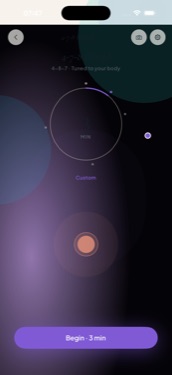
Place the phone face-down after starting a one-minute timer. If you use PulseWave, choose the one-minute Guided Reset and let the on-screen orb set the rhythm.
Nothing needs to be deep. Nothing needs to be impressive.
Let the breath stay comfortable.
Breathe in gently through your nose if that feels natural. Let the breath leave without pushing it. Notice the end of the exhale, then allow the next breath to arrive.
The NHS advises letting the breath move into the belly only as far as is comfortable, without forcing it. Its longer exercise runs for at least five minutes and works best as a regular practice. This one-minute version is a short interruption, not a substitute for that guidance and not a promise of a health result.
For this one minute
Let the shoulders drop on the exhale.
Keep the breath gentle enough that you do not have to recover from it.
When attention wanders, come back to the physical feeling of air moving.
There is no score. If counting makes the breath feel mechanical, stop counting. If following the breath feels uncomfortable, return to your normal breathing and look around the room instead.
Do not turn a pause into a performance.
A breathing exercise can become another task to win: slower, deeper, calmer. That urge defeats the point. You are observing a minute, not sitting an exam.
Watch for the body trying too hard. A huge inhale is not automatically a useful inhale. Fast or heavy breathing can bring on dizziness, tingling or discomfort. If that happens, stop the exercise and let your breathing return to normal. Seek medical advice for symptoms that concern you.
PulseWave uses a visual rhythm because there is less to remember. Follow the orb if it helps. Ignore it and breathe normally if it does not.
When the timer ends, ask one plain question.
“What was I about to do?”
You might still open the same app. You might answer the message you actually picked up the phone for. You might leave the phone on the table and drink the water beside it.
Any of those can be a deliberate choice. The minute succeeded if it gave you enough room to notice the choice. Feeling transformed is not required.
One minute can be the beginning, not the evidence.
Do not use a single attempt as proof that breathing “works” or does not work for you. The NHS recommends a longer, regular practice for the greatest benefit. If you want that, try the full NHS exercise or choose a longer paced session in PulseWave.
Some people dislike focusing on breath, especially when breathlessness or panic is already present. A grounding exercise may suit that moment better: name a few things you can see, feel the chair or floor supporting you, and let breathing take care of itself. A qualified professional can help you choose an approach for persistent symptoms or a health condition.
Your next scroll will still be there. Give the next minute to your breathing, then decide.