PulseWave / A practical guide
When sitting still is the least calming instruction possible
Tapping and binaural beats offer two different kinds of structure: one for the hands, one for the ears.
Guided tapping and binaural beats answer a small but familiar problem: what do you do when “just sit still” is the least helpful instruction you could receive?
Sometimes a deep breath is enough. Sometimes the body is restless, a conversation is still replaying, and the desk is full of half-finished things. Being asked to become still on command can feel like one more task that is going badly.
That is why some people reach for techniques with a little more shape. Tapping gives the hands a sequence. Binaural audio gives the ears a point of attention. Neither needs to become a ceremony. They simply turn the vague instruction to calm down into a next action.
PulseWave includes both on iPhone and Android: a guided 13-point tapping route and an optional binaural layer in Sound Studio. They are different tools for the same ordinary need: a little structure when unstructured quiet is out of reach.
Tapping gives restless hands a job
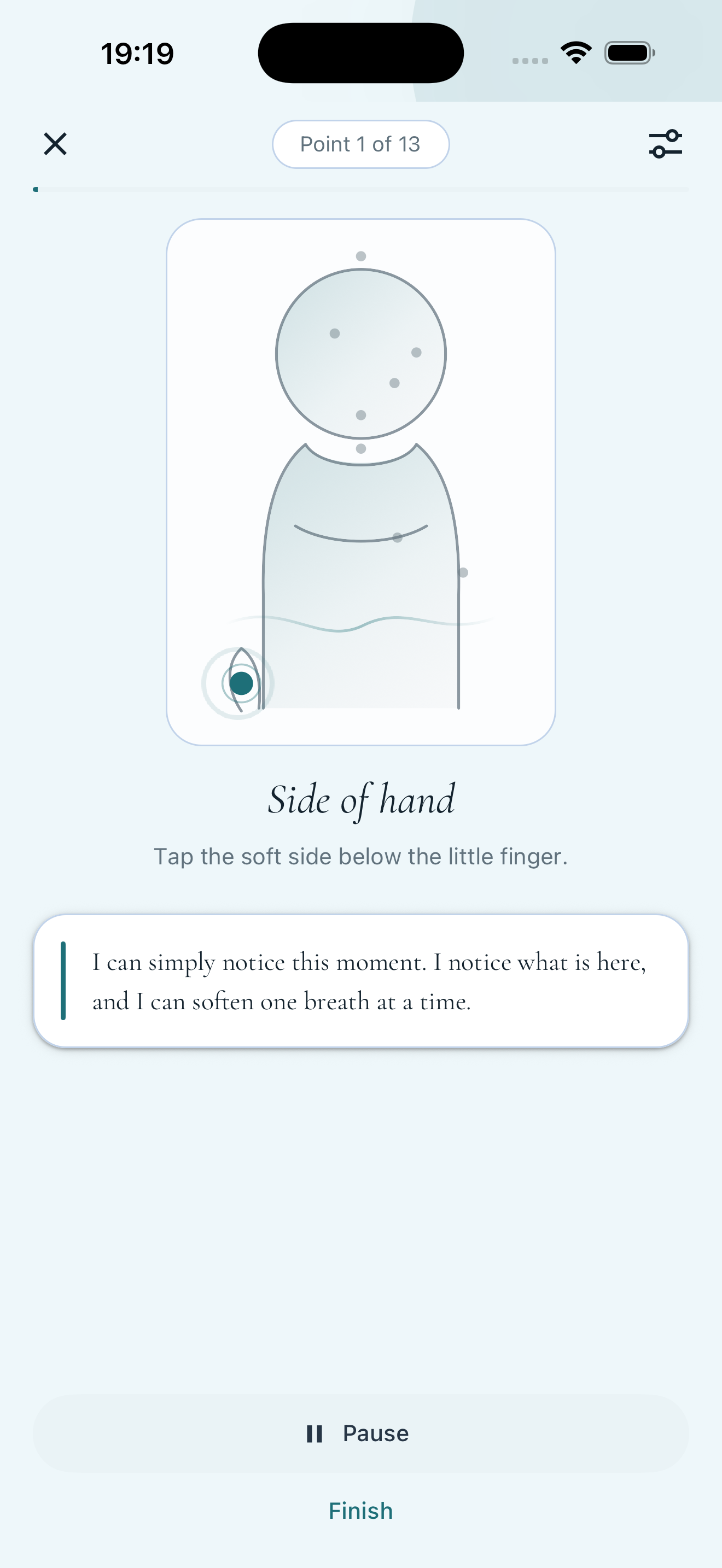
Tapping is easy to describe and oddly hard to understand from a label. You follow a sequence of light taps at marked points while an on-screen guide tells you what comes next. In PulseWave, the route moves through 13 points one at a time. There is no diagram to memorise or pace to guess; the screen stays with the next point.
What can that bring to a regular workday? A physical rhythm. A reason to lift a hand from the keyboard. A small sequence that occupies enough attention to interrupt rereading a message or opening another tab. It is less about a dramatic change than having a visible next move.
The research around tapping is worth reading with its labels attached. Much of the clinical literature is about Clinical Emotional Freedom Techniques (EFT), a structured approach that combines tapping on acupressure points with cognitive and exposure-based elements. A 2025 systematic review examined seven randomized trials with 506 participants. It found results favouring EFT over no intervention in the studies that made that comparison; against active comparators, it found results similar to cognitive behavioural therapy and similar or superior results to breathing therapy and progressive muscle relaxation. The interventions ranged from one to 56 sessions, and most studies raised some concern about bias because outcomes were self-reported and blinding was difficult.
That distinction matters. A guided app routine is not a clinical EFT programme. What it does offer is the accessible part of the gesture: a paced, visible route through a restless minute. The research gives context for why tapping is studied; the product makes the immediate sequence easier to follow.
Binaural beats are an audio experience, not a mood switch
Binaural beats are created when two slightly different tones are presented separately to the left and right ear. Listeners may perceive a beat at the difference between those tones; it is a perceptual effect, not a third tone in the recording. That is why stereo headphones are part of the setup.
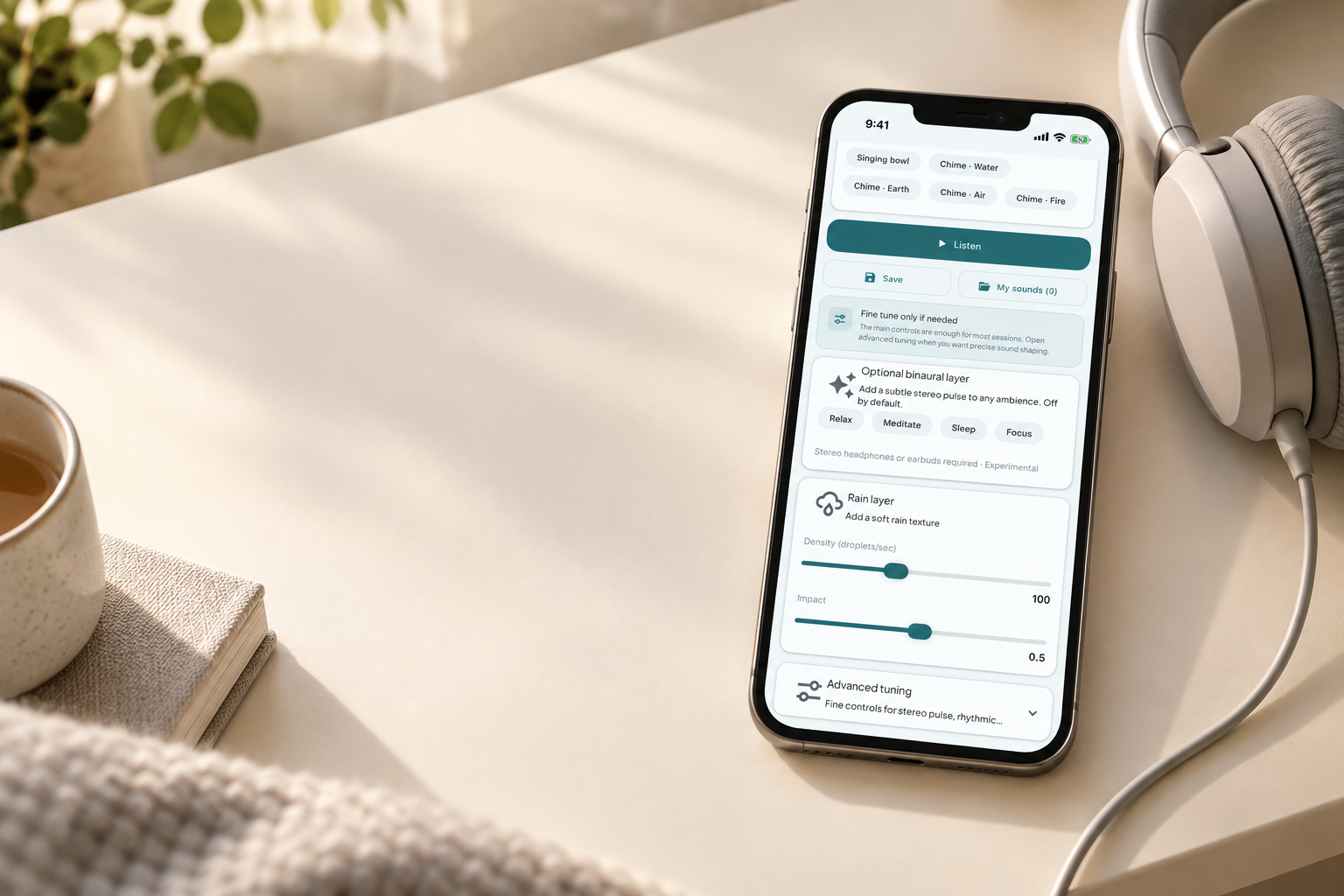
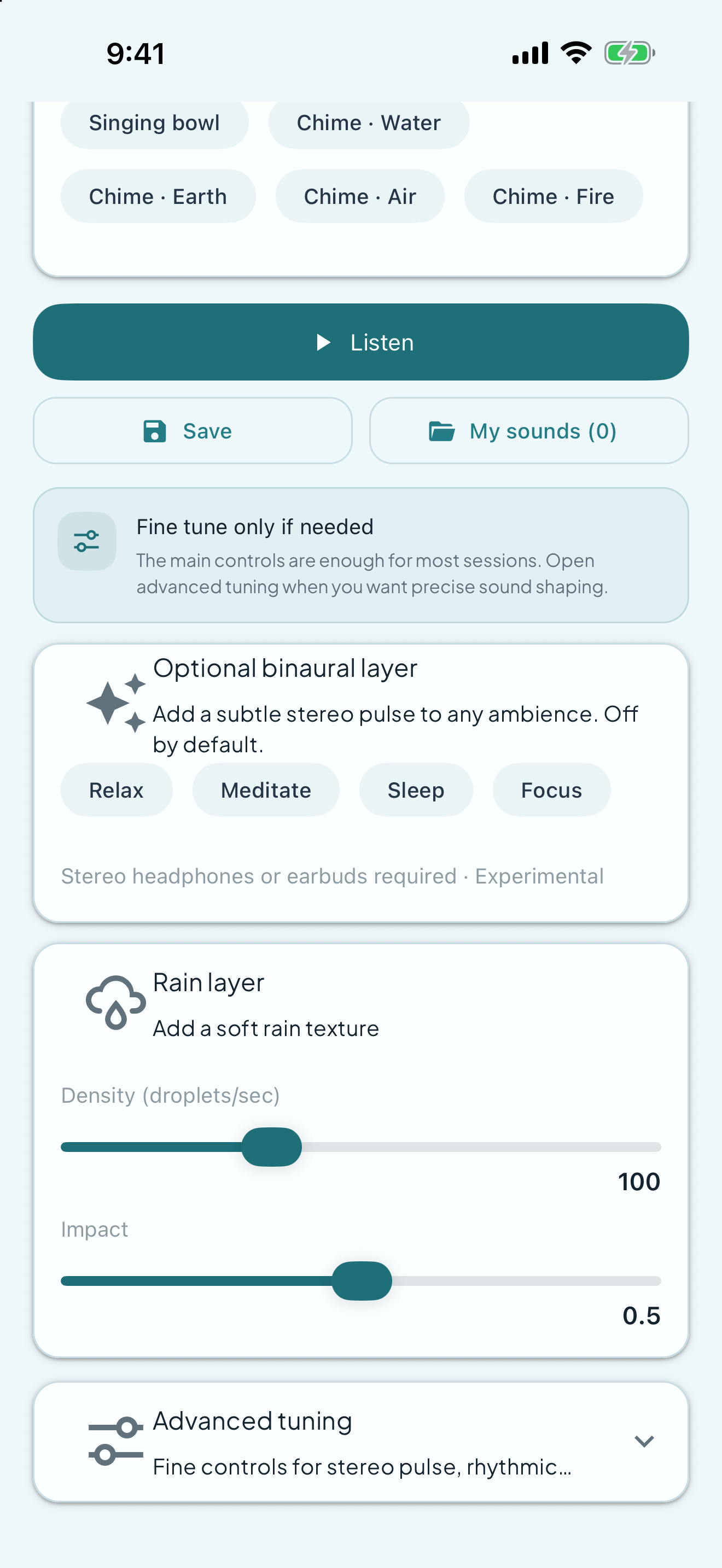
In PulseWave, the binaural layer is optional and off by default. The Sound Studio screen at the top of this article shows the exact control, including the stereo-headphones-or-earbuds requirement. Use it for stationary listening — never while driving, cycling, or operating machinery.
The term often arrives surrounded by more certainty than the research supports. The useful version is more specific. A 2019 meta-analysis covering 22 studies and 35 effect sizes reported an overall medium effect across outcomes involving cognition, anxiety, and pain perception; frequency, exposure time, and timing all mattered. A later systematic review of music and auditory stimulation found the physiological and cognitive findings mixed or too thin for firm conclusions.
That leaves room for preference. One person may like a quiet layer under rain or ocean while reading. Another may find that it competes with the task and switch it off. The question is not whether a frequency can transform an afternoon. It is whether the sound gives you a place to rest your attention for a while.
Three screens, three small choices
The two tapping screens below both say the same thing: Point 1 of 13 — Side of hand. The route is visible rather than tucked behind a diagram to memorise. The Sound Studio screen above makes the equivalent audio choice equally clear: the binaural layer stays off until you choose it with stereo headphones.
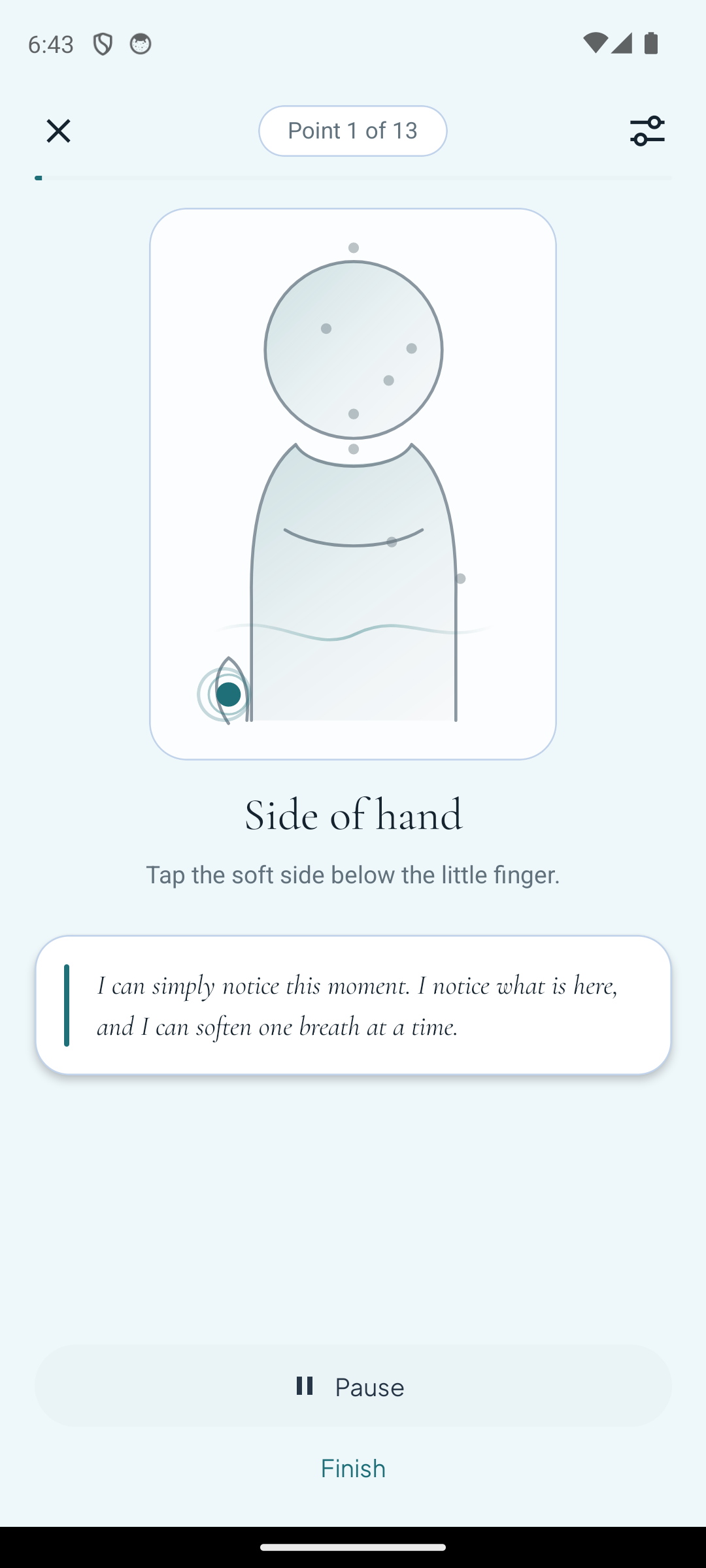
The iPhone and Android versions share that same guided route, so the practice does not depend on which phone happens to be in your hand. It is a practical detail, but a welcome one: the tool is there on the device you already use when the day gets noisy.
You can take a few deliberate taps before opening the next task. You can listen for a few minutes with headphones while the house settles down. Or you can decide that plain ambient sound, or no sound at all, fits the moment better.
Tapping and binaural audio are not interchangeable, and neither is the research behind them. One is a physical sequence with a clinical literature that studies a fuller intervention; the other is an auditory phenomenon whose effects depend heavily on context and protocol. Their modest common ground is simple: each provides a concrete place to start.
Try a guided tapping route or make a soundscape that fits your next quiet minute.
Research and product sources
- Choi, Sung & Lee (2025): Emotional Freedom Techniques for Anxiety Disorders — systematic review
- Garcia-Argibay, Santed & Reales (2019): Efficacy of binaural auditory beats — meta-analysis
- Chee et al. (2024): music and auditory stimulation — systematic review
- PulseWave features and platform availability
- PulseWave privacy policy