PulseWave / A practical guide
5–5 breathing vs. a longer exhale
Compare equal-length breathing phases with a longer exhale while keeping the same pace.
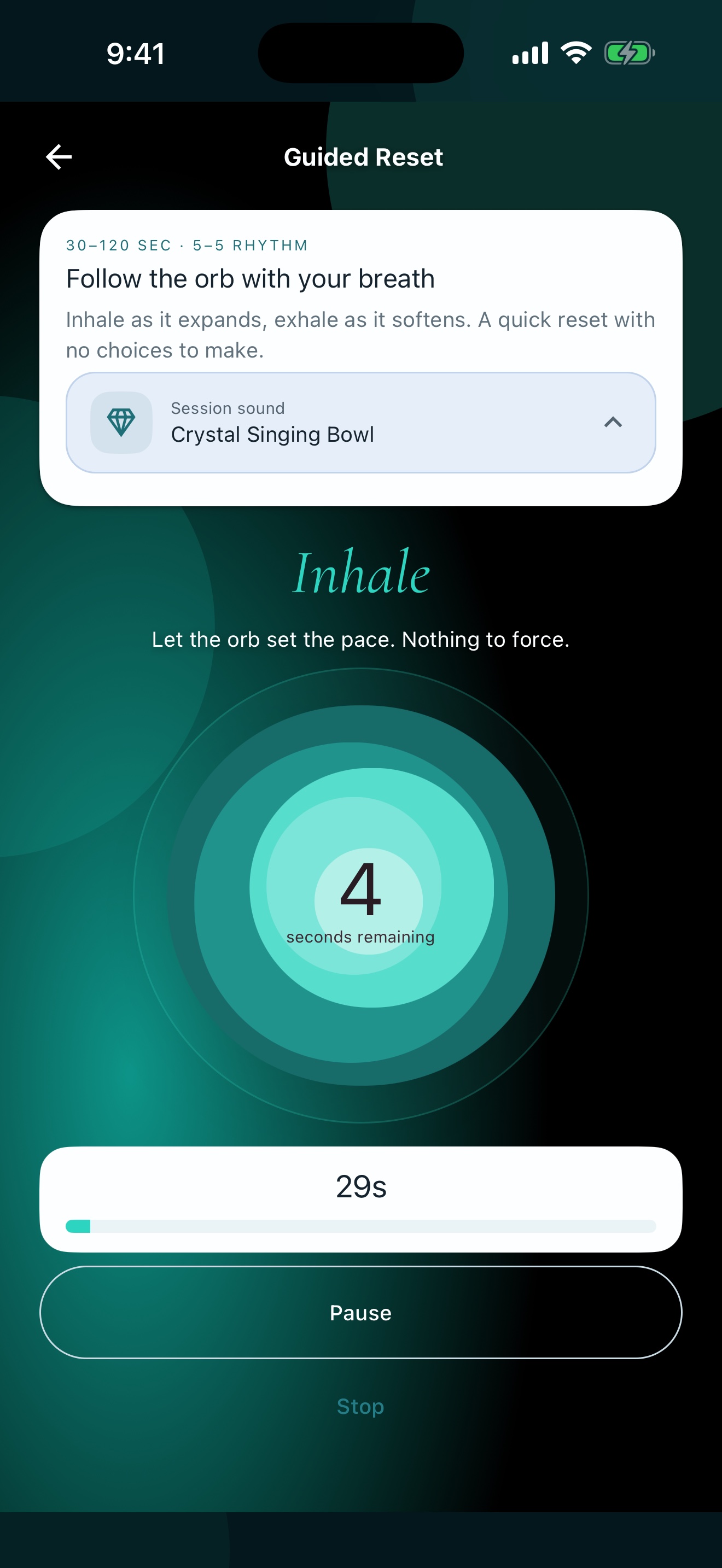
In 5–5 breathing, each inhale and each exhale lasts five seconds. A longer-exhale pattern gives more of the cycle to breathing out. PulseWave’s Guided Reset offers a short 5–5 session, and its breathing library gives you other patterns to explore. The easiest first comparison is to change the balance while keeping the overall pace steady.
Two breathing instructions can sound almost identical and give you different jobs. Five seconds in and five seconds out add up to ten seconds per breath. Four seconds in and six seconds out also add up to ten. Five seconds in and six out take eleven seconds, so the whole practice slows down. If the third option feels harder, the change in overall pace could explain part of the difference. It is worth looking at both numbers before attributing the experience to a longer exhale.
Compare the cycle before you compare the feeling
| Pattern | Timing | Useful question |
|---|---|---|
| 5 in, 5 out | Six cycles per minute, equal phases | Can I follow the even pace without having to take bigger breaths? |
| 4 in, 6 out | Six cycles per minute, more time breathing out | Does the change feel comfortable at the same number of breaths per minute? |
| Natural breathing | Your own pace and no count | Would this break be easier without a cue? |
On iPhone, look for Extended Exhale 4–6 in PulseWave’s breathing library, subject to access. Its timing keeps six cycles per minute. You can also set four seconds in and six out with no holds in the custom browser timer. A hold adds another variable. For a simple comparison, stick to patterns with an inhale and an exhale that you can follow at an ordinary depth.
What happened when a study compared the ratios?
A randomized trial published in 2023 assigned 100 healthy adults to twelve weeks of yoga-based slow breathing. One group practiced with a longer exhale. The other used equal-length phases. The researchers found no statistically significant difference between groups on the stress outcomes they measured. The study involved instruction and repeated practice at home. Its findings leave room for individual preference and do not settle what happens during a single timed break. “Slow breathing for reducing stress,” Complementary Therapies in Medicine.
Laborde and colleagues studied slow breathing at six cycles per minute with and without visual heart-rate feedback. That setup illustrates another distinction. A pacer tells you when to change phase. Biofeedback shows a measured bodily signal. The PulseWave Guided Reset orb is a timing cue. You can use it without treating the animation as a reading of your heart or stress level. Laborde et al., Psychophysiology.
Set up a comfortable comparison in PulseWave
Open Guided Reset and choose a short session. Put the phone where you can see the orb without holding it. Let it mark the change from inhale to exhale. There is no need to draw in more air to fill the time. If the cycle feels strained, end the attempt and return to your usual breath. You can also try the free PulseWave browser timer.
On another day, look for Extended Exhale 4–6 in the breathing library. Check the numbers and pick a comparable session length if the options allow. Some library sessions depend on access level. Keep the sound or haptics the same when you can, so you have fewer changes to sort through afterward.
A comfortable rhythm is useful because you can return to it when you have another spare minute. One attempt tells you how the pace felt in that moment. PulseWave lets you make the comparison without counting aloud or keeping one eye on a stopwatch. At the end, you can keep the even rhythm, try the longer exhale again, or choose a less demanding pace.
Try PulseWave
PulseWave on the App Store · PulseWave on Google Play · High Road Software
PulseWave features · PulseWave privacy policy · PulseWave breathing evidence library
Related reading · Compare guided breathing with meditation in five minutes.